Blog
Signal vs Noise: Evaluating Sources Under Pressure
How to separate credible evidence from loud distractions.

Speed without quality is dangerous
In high-pressure situations, teams are tempted to accept the first plausible answer. This is where verification fails. Speed only helps if it is paired with quality filters. A fact verifier should require that sources meet credibility criteria before they influence the final decision. Otherwise the system simply accelerates misinformation.
I’ve seen teams move fast and be wrong twice as fast. It’s a painful lesson.
Credibility indicators that matter
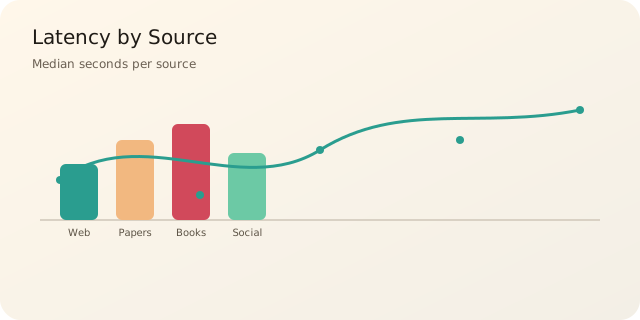
Credible sources share consistent markers: transparent methodology, traceable citations, and accountability for corrections. Peer-reviewed papers, official datasets, and established institutions typically meet these criteria. Social media posts, by contrast, often lack provenance. This does not mean they are useless, but they should trigger follow-up verification rather than be treated as definitive evidence.
My quick check: can I trace who produced the data and whether they correct mistakes publicly?
Context beats virality
A key failure mode is confusing popularity with validity. Viral posts may be useful for detecting a claim’s spread, but they are not evidence of truth. Verifiers should treat social signals as discovery cues, then shift to authoritative sources to confirm or refute. This is why a layered system—social discovery followed by academic or archival confirmation—is so powerful.
Virality tells you what people believe, not what is true.
Structured prompts prevent drift
Even good sources can be misused if prompts are vague. Structured prompts instruct agents to extract specific facts, clarify uncertainties, and cite sources. This prevents agents from slipping into narrative synthesis without evidence. It also makes results comparable across agents, which is essential for fair voting.
When the prompt is sloppy, the answer is sloppy. It’s that simple.
Practical source triage
Implement a triage checklist: identify primary sources first, check for independent corroboration, and downgrade sources that are anonymous or unverified. Require agents to log why a source was accepted. Over time, this builds a feedback loop where source quality is measured and improved. Under pressure, these guardrails keep verification honest.
A small checklist beats a massive spreadsheet every time.